Canada’s AI Data Centre Push Races Ahead
Canada spends billions on building domestic AI computing power. New data centres are announced for Quebec and Alberta. The idea is to keep our data in Canada, support research, and stay competitive.

The infrastructure is certainly moving fast, but policy lags.
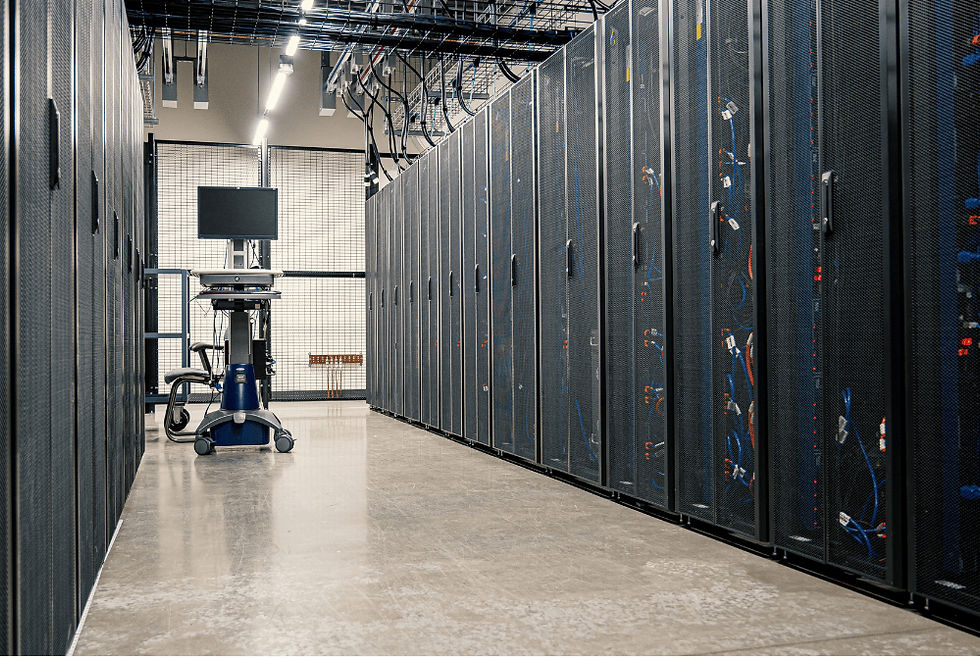
AI data centres are not the same as conventional facilities. They pack dense clusters of Graphics Processing Units (GPUs) and massive storage into a small footprint. That translates into huge electricity loads and heavy cooling needs. As AI workloads grow, energy demand from data centres is expected to rise sharply over the next decade.
See the full in-depth article by Lark Scientific Researcher Lucas Bettle, Canada’s AI Data Centre Strategy Leaves Key Questions Unanswered.
Energy Demands
To put that growth in perspective, global data centres already use more than 1% of all the electricity. Add AI, and that could double or more in the next 4 or 5 years. Canadian regulators already have AI data centres flagged as a major source of future power demands.

But Canada has some real advantages. Lower temperatures (at least for part of the year) help reduce cooling loads. Our electricity grid is relatively clean, with hydro supplying about 60% of national generation. On paper, that makes Canada a logical place to host energy-hungry AI systems.
Those advantages help explain the wave of projects now underway.
Across the country, planned and existing AI data centre capacity totals around 10 gigawatts, with most of it still in development. TELUS has opened a sovereign AI facility in Rimouski, PQ. Cohere launched a major site in Cambridge, ON, with substantial federal backing. Alberta has several large proposals, including a massive industrial park that would dwarf most global data centre campuses, though it remains speculative.
Universities and telecom firms are also expanding AI capacity through shared research platforms and upgrades to existing facilities.
Regulatory Hurdles
Canada lacks a clear regulatory framework. The federal government introduced the Artificial Intelligence and Data Act in 2022, but it stalled when Parliament prorogued in early 2025. So, there is still no dedicated AI law.
Instead, AI data centres are governed by a combination of:
Privacy legislation
Environmental assessments
Utility regulation
Municipal zoning
None of these regulations specifically considers large-scale AI infrastructure.
Uncertainty in Canadian AI Data Centres
Soon, electricity demand from AI data centres could compete with requirements to electrify transportation, buildings, and industry. Water use is another key issue.
Cooling systems draw heavily on freshwater, especially during heat waves or droughts. Emissions are always a concern, especially for those relying on natural gas.

There is also financial uncertainty. If AI demand doesn’t meet projections, expensive facilities are underused.
In Conclusion
Canada’s AI ambitions make sense. The investment is already happening. What’s missing is policy that sets clear expectations, manages environmental impacts, and ensures public benefits keep pace with private gains. Without that, Canada risks building first and figuring out the consequences later.


