High-tech Nature-inspired Solutions for Urban Cooling
Updated: Oct 22, 2025
It’s getting hotter in Canadian cities. With increasingly dangerous heat, the next frontier in urban cooling must move beyond trees and parks. Innovative technologies and design strategies are merging with natural systems to create holistic solutions for the urban heat island effect.

Learn more in the in-depth article by Lark Researcher Denis Koshelev: Innovative Approaches to Mitigating Urban Heat.
Integrating Green and Blue Systems
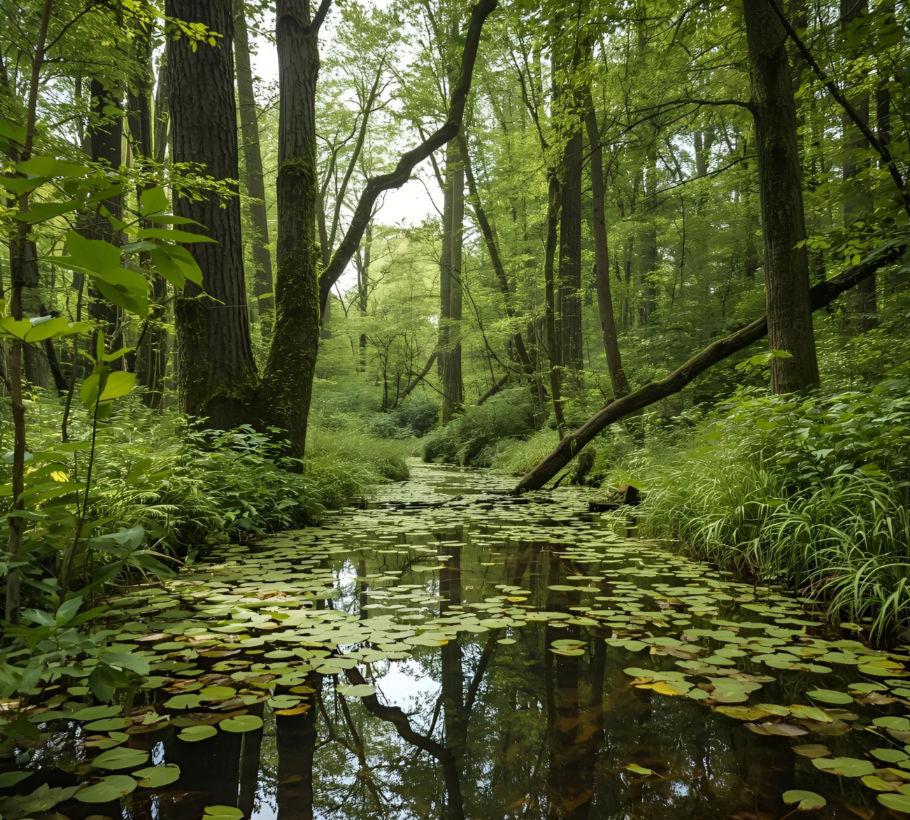
A promising concept is the systematic integration of green and blue infrastructure (UGBI). Trees and parks (green infrastructure) are connected to wetlands, ponds, and streams (blue infrastructure) as part of a larger network, rather than isolated features. Together, they deliver multiple benefits by:
Lowering air temperatures
Managing stormwater
Improving air quality
Supporting biodiversity
This integrated approach reduces urban heat by several degrees, particularly during heatwaves. Canadian research confirms that urban forests and parks are most effective, though more work is needed in smaller cities and with water-based systems.
Expanding Urban Forests and Smart Design
Trees remain one of the most powerful cooling tools. Strategic canopy expansion can lower urban temperatures by 1–5°C, especially during peak heat hours. For example, Montreal studies found that planting dense street canopies reduced air temperatures by up to 4°C. Wide crowns (broad shade areas) proved more effective than tall, narrow trees, an important insight for city planners.

Building Smarter: Roofs, Walls, and Surfaces
Beyond trees, green roofs and living walls bring vegetation directly into urban buildings, reducing rooftop temperatures by as much as 20°C and lowering energy demands. Similarly, reflective surfaces and cool roofs use advanced pigments to reflect solar radiation, reducing attic heat loads by 20–30°C.
Even roadways are getting an upgrade. Researchers at École de technologie supérieure developed conductive asphalt pavements that transfer surface heat to lower layers to reduce surface temperatures.
Cutting-Edge Cooling Innovations
New frontiers include phase change materials (PCMs), which act like thermal batteries to absorb and release heat, reducing building energy use by up to 30%. Biomimetic systems (artificial designs, materials, and processes that mimic or imitate structures, functions, and strategies found in natural biological systems) inspired by termite mounds and plants offer natural ventilation and cooling with dramatically lower energy use.
Artificial intelligence is also transforming urban climate resilience. Tools like Evergreen’s AI for the Resilient City platform integrate satellite data, building footprints, and weather patterns to map heat risks with unprecedented precision, guiding interventions where they’re needed most.
The Future of Urban Cooling
The ultimate solution may lie in combining approaches, pairing reflective materials with greenery, using AI to plan interventions, and weaving water and vegetation into city design. Together, these tools can reduce peak urban temperatures by up to 4.5°C and cut cooling energy demand by as much as 35%.
By combining time-tested natural systems with modern technology, cities can build resilience and comfort for decades to come.


